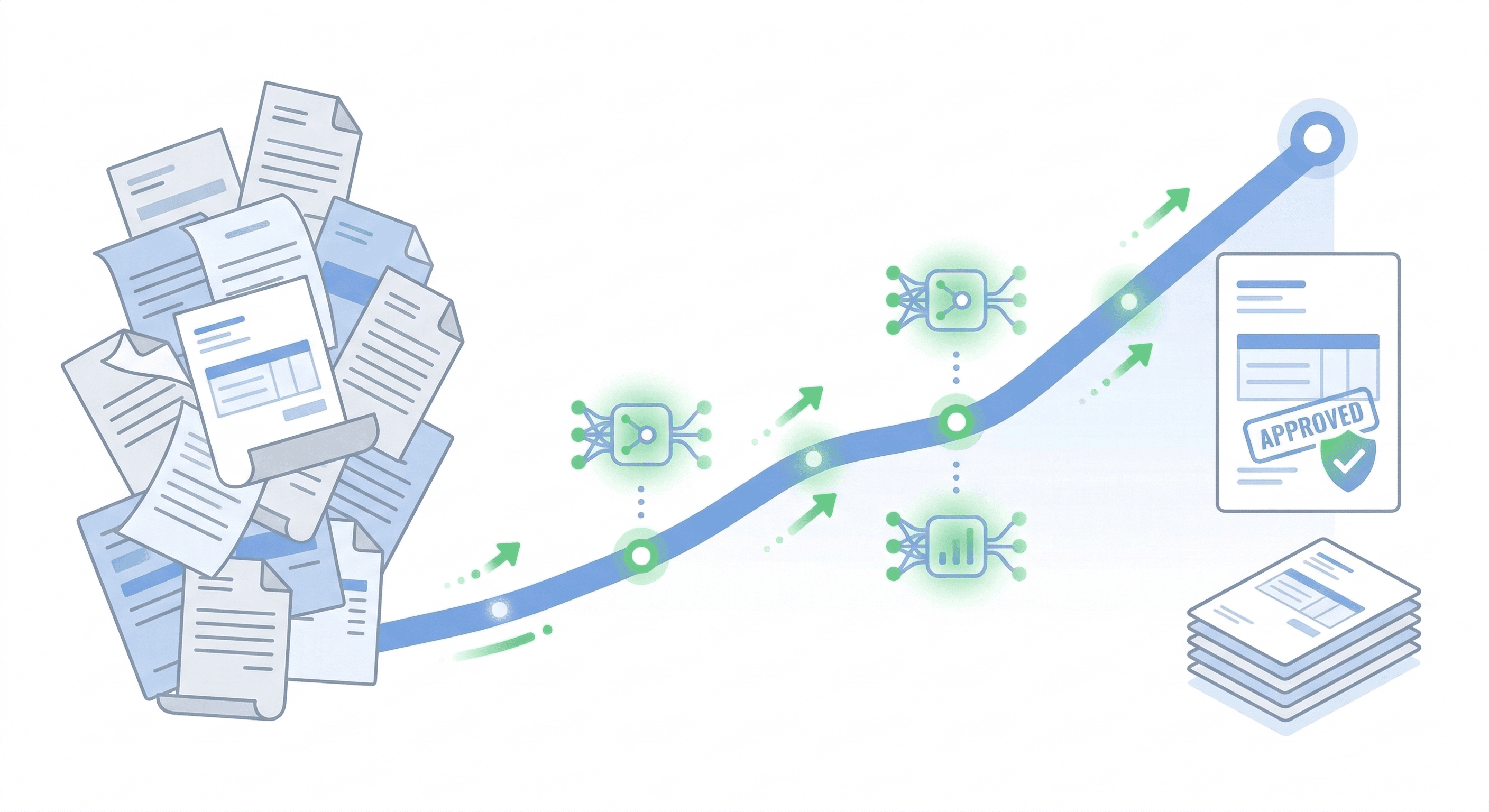
One of the most common reasons founders hesitate to automate is the "Rip and Replace" Fear.
You’ve spent years (and thousands of dollars) building your current CRM, ERP, or custom database. The idea of "switching to an AI system" feels like a decade-long project that will break your entire operation.
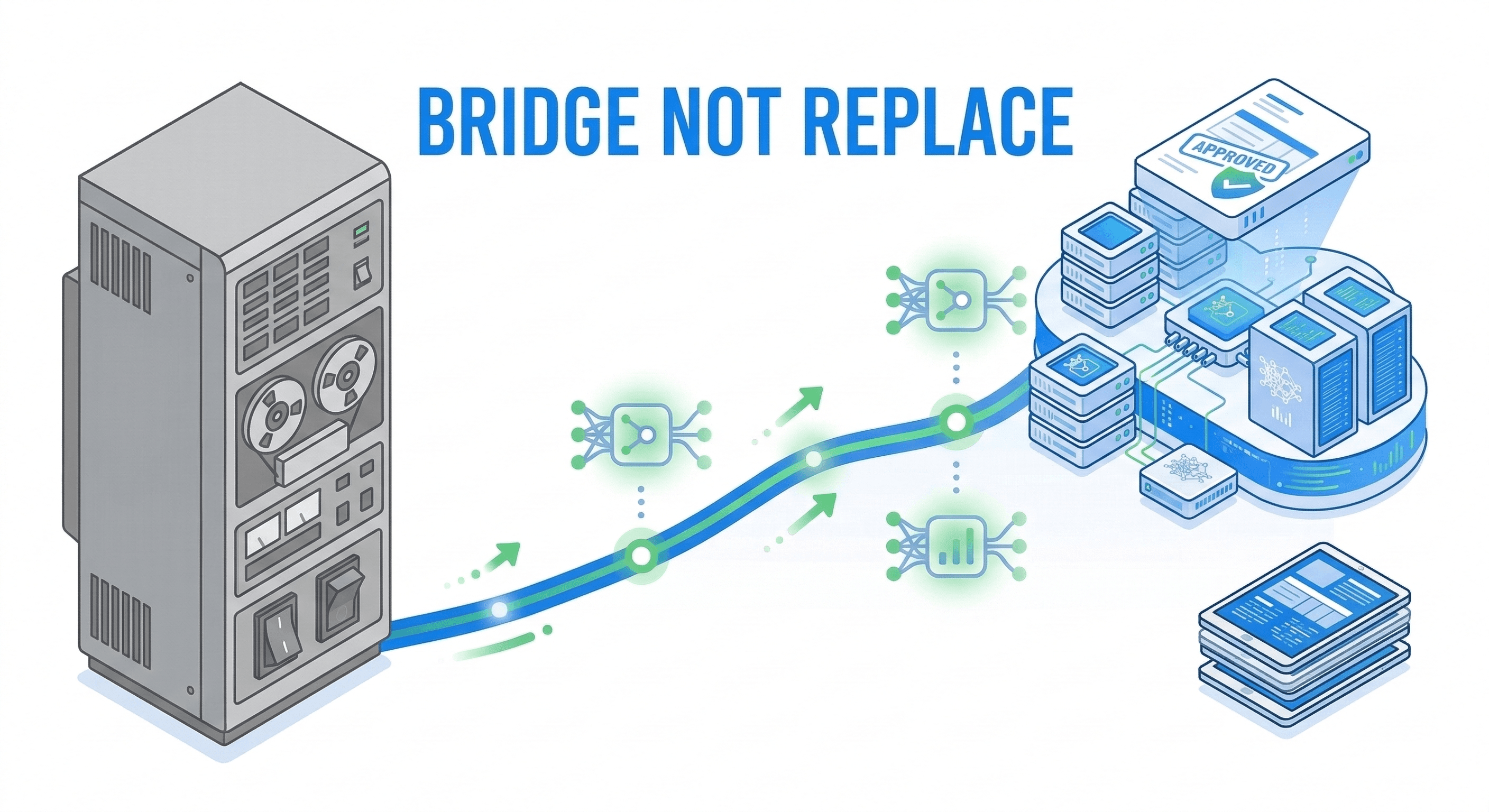
The truth? By 2026, the paradigm has shifted. You don't need a total replacement; you need an Architectural Bridge. At Autopilot Studio, we don't destroy your legacy systems - we augment them.
1. The Trap of Technical Debt
Legacy systems (the ones you’ve been using for 5+ years) were designed for a siloed environment. They weren't built for real-time data or AI APIs. They often suffer from:
- Data Silos: Valuable information is trapped in proprietary formats.
- Compatibility Gaps: They struggle to "talk" to modern cloud-based AI.
- Security Risks: Exposing old software to the web without a bridge can lead to vulnerabilities.
However, sticking with these silos is a financial liability. Organizations using AI-led integration are 1.8 times more likely to double their ROI compared to those stuck in traditional modernization methods.
Source: Integrass: Integrating AI into Legacy Apps 2025
2. The "Clean Core" Strategy
Instead of overhauling your foundation, we use a "Side-by-Side" Integration. Think of your legacy system as the "Source of Truth" (the safe where the gold is kept) and the AI as the "Digital Employee" who does the heavy lifting outside the safe.
How we build the bridge:
- API Wrappers: we "wrap" your old modules in modern code so they can communicate with AI.
- Middleware Bridges: Using tools like Make.com or custom AI gateways, we create a digital translator that moves data between your CRM and the AI without changing your original software.
- Microservices: We modernize specific pieces of your workflow (like invoicing or lead routing) one by one, rather than attempting a massive, risky transformation.
3. Why Inaction is More Expensive Than Integration
If you refuse to integrate because "the system is old," you are paying a Manual Labor Tax.
Research indicates that manual data entry between disparate systems (moving data from a PDF to an old ERP, for example) costs American businesses $28,500 per employee annually.
| Approach | Traditional Modernization | AI-Led Integration (The Bridge) |
|---|---|---|
| Risk Level | High (Total replacement) | Low (Side-by-side) |
| Timeline | 12 - 24 Months | 4 - 8 Weeks |
| Cost | Massive Capital Outlay | Operational ROI Focus |
| Data Flow | Siloed | Orchestrated |
Source: Parseur: Manual Data Entry Costs Report
4. The Verdict: Stability + Agility
You don't have to choose between the stability of your old systems and the agility of new AI.
The successful B2B organizations of 2026 are those that build an AI Orchestration Layer on top of their existing infrastructure. This allows your team to use the tools they already know, while the AI works in the background to handle the "grunt work" and predictive analysis.
Stop Waiting for the "Perfect Time" to Rebuild.
The perfect time to rebuild doesn't exist. The perfect time to integrate is now. We specialize in finding the "hooks" in your existing tech stack to plug in the power of automation.
Book a technical consult with Autopilot Studio.
Research provided by The Strategic Evolution of B2B Automation Services Analysis.