Accounts Payable (AP) is arguably the least sexy part of running a business. It’s a repetitive cycle of opening PDFs, squinting at invoice numbers, and chasing down managers for approvals.
But for a mid-sized manufacturer, "boring" problems often hide the biggest profit leaks.
By early 2026, manual AP isn't just a slow process; it’s a strategic liability. We’re going to look at a tier-one automotive supplier - Sterling Manufacturing - to see how they turned a $120,000 loss into a $315,000 gain by automating a single back-office function.
Editorial note: this is an analysis of published industry research, not a project delivered by Autopilot Studio.
1. The Pre-Automation Nightmare
Before they integrated an AI-driven AP system, Sterling Manufacturing (2,800 employees) was struggling with the "Manual Labor Addiction." Their reality was common among manufacturers:
- Cycle Time: It took 14 days to process a single invoice.
- Error Rate: 8-12% of invoices had errors (miscoding, duplicates, or wrong amounts).
- Lost Money: They were losing over $120,000 every year simply because they were too slow to capture early-payment discounts.
If your AP team is currently spending 65% of their time on data entry and "approval chasing," you are essentially paying for high-level talent to do grunt work.
Source: Venturesathi: AP Automation Case Study for Manufacturing
2. The Solution: "Straight-Through Processing" (STP)
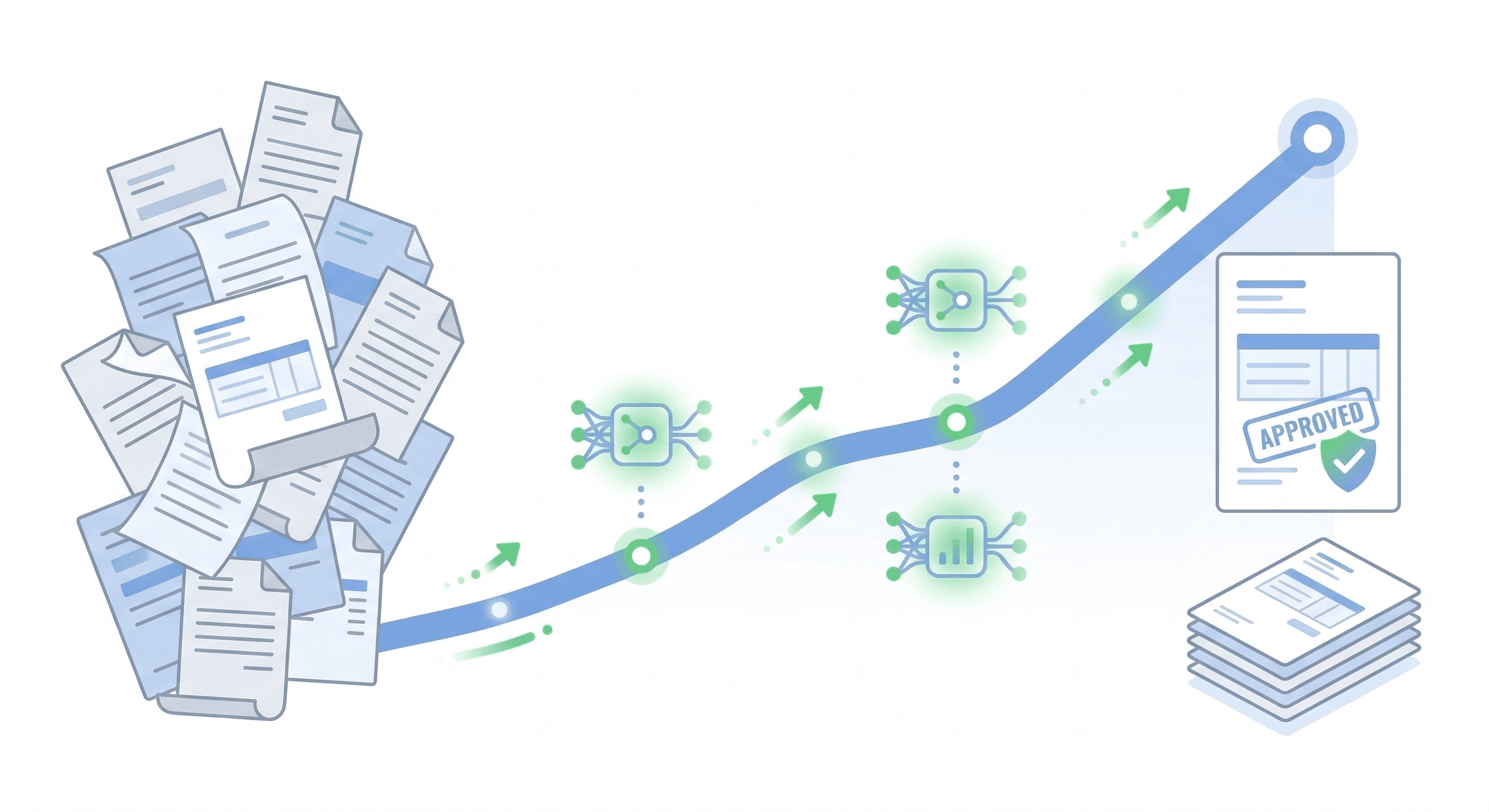
At Autopilot Studio, we look for "Straight-Through Processing." This is the holy grail of automation: an invoice arrives via email, the AI reads it, matches it to the purchase order, codes it to the right department, and schedules the payment - without a human ever touching it.
In 2026, OCR (Optical Character Recognition) accuracy has reached 95-99%. AI can now:
- Perform 3-Way Matching: Automatically verify the invoice against the purchase order and the receiving report.
- AI-Powered Coding: Predict General Ledger (GL) coding with 95% accuracy.
- Detect Fraud: Catch 99.9% of duplicate payments that humans miss.
3. The Result: A $315,400 Bottom-Line Boost
The transformation at Sterling was immediate. Within one year of implementing AI-driven invoicing, the numbers flipped:
| Metric | Pre-Automation | Post-Automation | Improvement |
|---|---|---|---|
| Cycle Time | 14 Days | 2.5 Days | 82% Faster |
| Cost Per Invoice | $8.50 | $3.20 | 62% Cheaper |
| Error Rate | 8-12% | 0.8% | 87% Reduction |
| Staff Efficiency | 8 People | 3 People | 5 FTEs Redeployed |
The Payback Period: The project broke even in just 1.5 months.
The real win? Those 5 employees weren't laid off - they were redeployed to strategic roles. They started performing spend analysis and supply chain optimization, uncovering an additional $400,000 in business value.
Source: Artsyl: 2025 Invoice Processing ROI Guide
4. Why Manufacturing Can't Wait
Manufacturing supply chains are too complex for spreadsheets. When you have multi-language invoices, diverse shipping formats, and hundreds of vendors, human error is a mathematical certainty.
If you aren't automating your back-office, you are effectively paying a "Manual Labor Tax" of roughly $28,500 per employee every year.
Is your back office bleeding money?
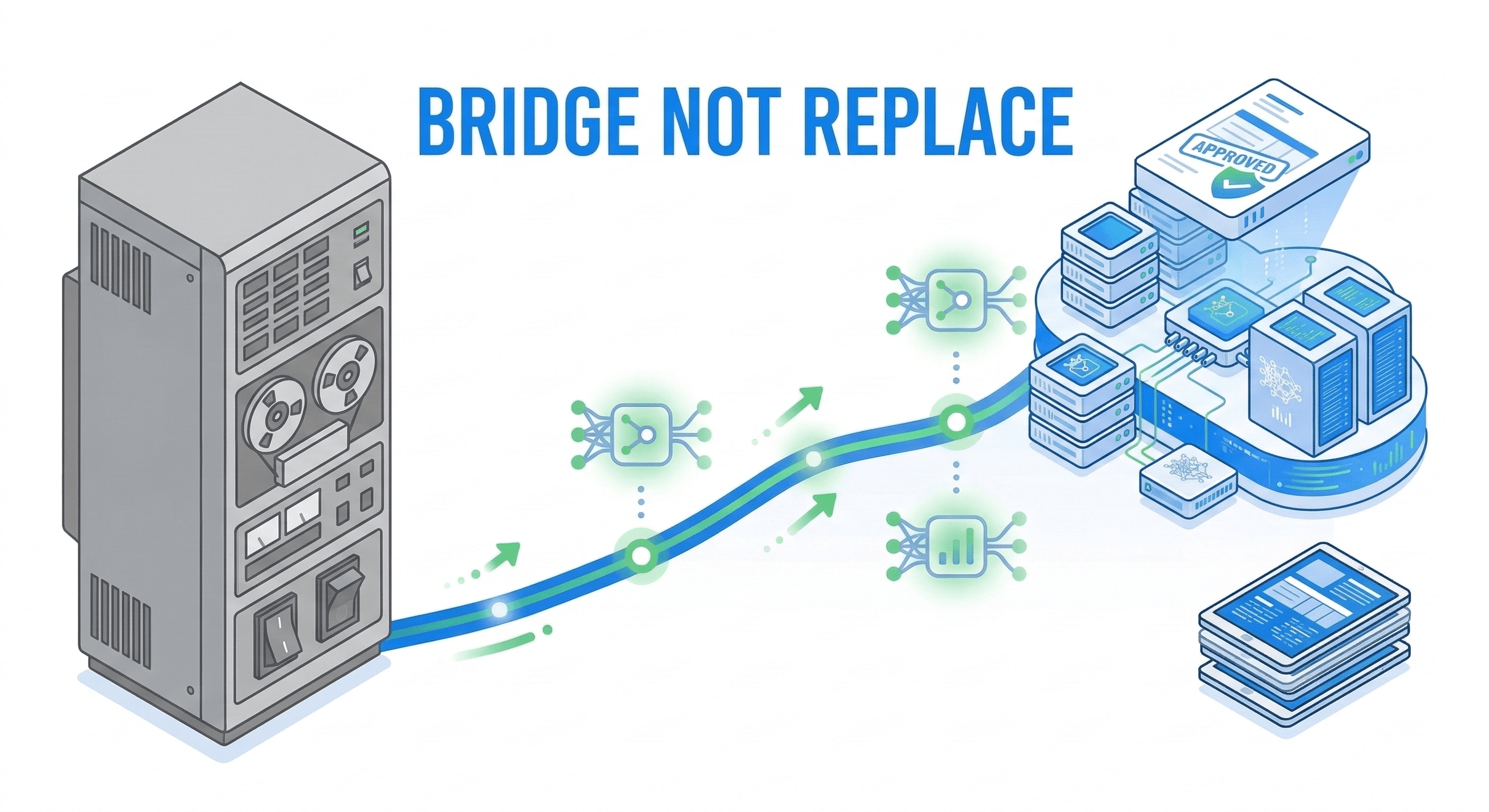
Automation isn't about replacing your team; it’s about giving them the tools to stop doing $15/hour work so they can focus on the $150/hour strategy.
Don't guess your potential savings. We've built the models to prove exactly how much time and cash you're leaving on the table.
Book a call and we will estimate your ROI.
Research provided by The Strategic Evolution of B2B Automation Services Analysis.